





Sunday, Oct 11, 2026 22:45 [IST]
Last Update: Saturday, Oct 10, 2026 17:07 [IST]


GANGTOK,: The
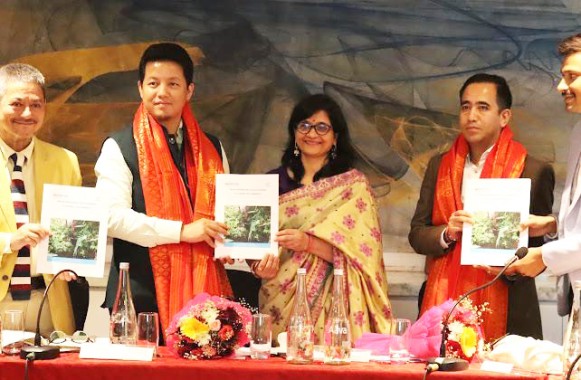
Legislative Roundtable and Eastern Himalayan Policy Dialogue on “Strengthening
Mountain Water Security through Springshed Governance in the Sikkim-Darjeeling
Himalayas” brought together legislators, researchers, government officials and
water-sector experts in Siliguri on October 8 to discuss the growing challenge
of drying springs and the need for a coordinated policy response.
In her opening remarks, SaciWATERs executive
director Dr.JayatiChoureyhighlighted the importance of recognising the smaller
and more fragile water systems that sustain everyday life in the Himalayas.
While the region is widely known as the source of major South Asian rivers,
springs, streams and local catchments remain essential to the daily water needs
of mountain communities. She emphasised that infrastructure development must be
complemented by source sustainability and community engagement.
Presenting the policy document, Dr.Kabindra Sharma
of SaciWATERs drew on field survey findings and inputs gathered from
representatives of 25 organisations during the multi-stakeholder consultation
held in Darjeeling on October 3. The research highlighted a persistent gap
between access to tap-water infrastructure and the reliability of supply,
informs a press release.
Sharma emphasised the urgent need to address the
governance gap in spring management, noting that the challenge is not simply a
lack of government funding but the absence of a dedicated, coordinated
governance structure for springs. He called for better alignment of existing
government programmes, clearer institutional responsibilities, stronger
protection of recharge areas and greater community participation to translate
public investment into reliable and sustainable water security.
Sikkim Lok Sabha MP Indra Hang Subba called for
greater national attention to Himalayan water security, highlighting the
region’s underrepresentation in policy discussions despite its ecological and
strategic importance. He emphasised stronger coordination among government
departments, collaboration with forest agencies, and greater investment in
research and data generation. He also proposed considering a dedicated
parliamentary mechanism for Himalayan water governance.
Minister Sonam Lama stressed the importance of
region-specific planning, community participation and avoiding redundant
infrastructure. He called for greater coordination among government agencies
and stronger integration of environmental sustainability into water-supply
initiatives.
Prof. M. P. Lama, Emeritus Chief Economic Adviser
to the Government of Sikkim, underscored the ecological and strategic
significance of the Eastern Himalayas. Drawing attention to the diminishing
replenishment of springs, he highlighted the need for public awareness,
appropriate legal and institutional mechanisms, responsible tourism and
stronger approaches to resolving water-related disputes. He also called for
greater collaboration across administrative and geographical boundaries.
Prof. Vimal Khawas of Jawaharlal Nehru University
emphasised that the challenge is not simply the availability of rainfall but
the ability of mountain landscapes to retain and use water. He highlighted the
importance of community-managed springs, capacity-building and preparedness for
water-related emergencies.
Dr. Bhuchar of the International Centre for
Integrated Mountain Development (ICIMOD) called for stronger data generation,
open information systems, capacity-building and nature-based approaches to
springshed management. He also stressed the need to clarify responsibilities
across upstream and downstream areas. Representatives from the Public Health
Engineering Department of Sikkim and the Brahmaputra Board highlighted the
importance of identifying recharge areas and integrating springshed management
into long-term water-supply planning.
Prof. Laxman Sharma of Sikkim University
emphasised the value of Indigenous and traditional knowledge in water
governance, alongside the importance of integrating this knowledge into
education and institutional practice. Other participants highlighted community
stewardship, water-user groups and better coordination between watershed and
springshed programmes. Dr. Mirza Zulfiqur Rahman of Heinrich Böll Stiftung, New
Delhi, urged timely action, noting the importance of aligning the pace of
development with the capacity of springsheds to sustain water sources.
The post-lunch session featured two panel discussions
focusing on integrating Eastern Himalayan knowledge systems into academic
curricula and building a water-secure Himalaya by 2047. Students from
Darjeeling Hills University and Sikkim Alpine University participated in the
discussions, bringing an educational and youth perspective to the dialogue. The
sessions highlighted opportunities to connect regional knowledge, academic
engagement and policy priorities in addressing the water challenges facing
Himalayan communities, the release mentions.
“The dialogue reinforced the need to move from
springshed development towards a more comprehensive approach to spring
governance. A proposed National Framework for Himalayan Spring Governance could
help clarify institutional responsibilities, strengthen monitoring, protect
recharge areas, recognise community knowledge and integrate source
sustainability into existing water programmes,” the organisers said.
The meeting concluded with a call for continued
collaboration among legislators, government institutions, researchers,
universities and mountain communities to advance practical policy responses and
strengthen long-term water security across the Eastern Himalayas.