


Friday, Mar 20, 2026 13:15 [IST]
Last Update: Friday, Mar 20, 2026 07:44 [IST]


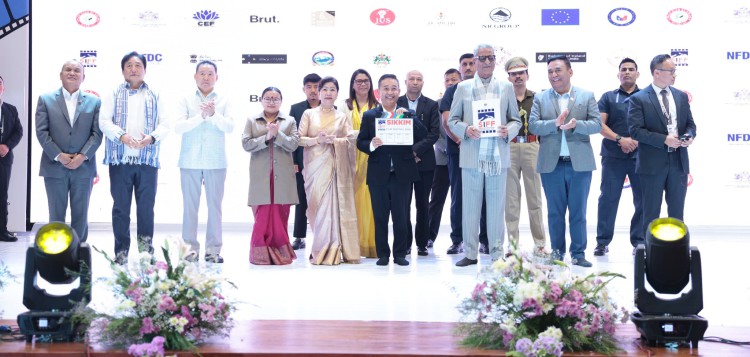
GANGTOK,: Sikkim International Film Festival (SIFF) 2026 was inaugurated on
Thursday by Governor Om Prakash Mathur and Chief Minister and SIFF
patron-in-chief Prem Singh Tamang-Golay by jointly clapping the director’s
clapboard at the inaugural ceremony held at Manan Kendra here.
The
SIFF, organized by the Information and Public Relations (IPR) department in
collaboration with the Ministry of Information & Broadcasting and the
National Film Development Corporation (NFDC), is a platform that brings
together filmmakers, storytellers, and audiences to celebrate cinema from
around the world. Through a curated selection of films,conversations, and
industry interactions, the festival creates a space for culturalexchange and
creative dialogue.
The
festival is participated by 19 countries and will screen 40+ films from March
19 to 22. Alongside global cinema, SIFF places a strong focus on voices from
Sikkim and the North-Eastern region, providing a stage for local stories while
connecting them with the wider national and international film community.
Objectives
of SIFF are to establish Sikkim as a significant cultural and cinematic
destination by creating, a platform that showcases diverse global and regional
cinema, while fostering creative exchange, industry engagement, and greater
visibility for filmmakers from Sikkim and the North-Eastern region.
The
inaugural session had the participation of cabinet ministers, filmmakers and
guests from around the world.
Addressing
the gathering, Chief Minister Prem Singh Tamang-Golay expressed pride and
honour in hosting the first international film festival in Sikkim. He expressed
sincere gratitude to the Prime Minister Narendra Modi, and the Government of
India, particularly the Ministry of Information & Broadcasting and the
National Film Development Corporation, for their consistent support and
patronage, without which the festival would not have been possible.
The
Chief Minister further conveyed his appreciation to the Governor of Sikkim, Om
Prakash Mathur, stating that his presence had added dignity and significance to
the occasion.He remarked that the festival marked a significant milestone in
Sikkim’s journey towards establishing itself as a global centre of art,
culture, and creative expression. He noted that SIFF was an important cultural
initiative positioning Sikkim as a vibrant meeting point for cinema,
creativity, and cultural exchange in the Eastern Himalayan region, while also
reflecting the State government’s commitment to promoting arts, culture, and
the creative economy.
Highlighting
the significance of cinema, Golay stated that it was not merely a form of
entertainment but a powerful medium of storytelling that transcends borders,
connects communities, and fosters mutual understanding.
He
informed that SIFF 2026 aimed to celebrate meaningful cinema and provide a
dynamic platform for dialogue, collaboration, and innovation. He expressed
satisfaction over the collaboration with the European Union and other
participating countries, noting that such partnerships strengthened
people-to-people connections and cultural exchange.
The
Chief Minister highlighted that the festival featured key components such as
the short film competition open to filmmakers from India, Nepal, Bhutan,
Sikkim, and the neighbouring regions, along with the SIFF Film Market, which
would provide a platform for filmmakers and creative professionals to pitch
ideas, explore financing opportunities, and connect with wider audiences.
He
added that workshops and masterclasses by industry experts would further equip
participants with practical skills and insights, thereby strengthening the creative
ecosystem.
Golay
stated that since 2019, Sikkim had been steadily emerging as a promising
destination for the creative economy under the state government’s focused
initiatives. He added that by nurturing the creativity and entrepreneurial
spirit of the youth, the State was contributing meaningfully to the vision of
Viksit Bharat 2047.
The
Chief Minister further highlighted several initiatives undertaken by the State
government to promote the creative sector, including the establishment of art
galleries, introduction of the State’s Creative Economy Policy, and programmes
such as Kalakar Bharosa Samman to recognise and support artists. He also
mentioned continued financial assistance to institutions like the Sikkim State
Academy of Music, Dance and Drama for promoting performing arts.
He
informed that the Government had introduced recognitions such as Sikkim Film
Awards, Golden Voice of Sikkim, and Golden Feet to encourage young talent. He
further stated that cash incentives were being provided for films shot in
Sikkim with substantial local participation, which not only supported the film
industry but also generated employment and showcased the state’s natural beauty
and cultural richness.
He
also mentioned the proposal to establish a Nepali Film Certification Board in
Sikkim to ease logistical challenges for filmmakers and support the growth of
Nepali-language cinema in the region.
Emphasising
Sikkim’s potential as a filming destination, the Chief Minister noted that the
State’s scenic landscapes and cultural richness had long attracted filmmakers.
He recalled that works associated with legendary cinematic personalities such
as Dev Anand had been filmed in the region, and acknowledged the contributions
of noted personalities including Ugyen Chopel, Danny Denzongpa and Geetanjali
Thapa, among others, who have brought recognition to Sikkim through their
achievements.
He
further noted that with the rise of digital platforms, Sikkim had also gained
visibility in global content, thereby strengthening its position as an emerging
hub for filmmaking.
The
Chief Minister stated that SIFF was not merely an event but a vision to place
Sikkim on the global cultural map, create opportunities for youth, and
celebrate the universal language of cinema. He expressed confidence that the
festival would inspire collaborations and open new avenues for filmmakers and
artists.
He
concluded by extending his sincere thanks to the Government of India, all
partners, participants, and organisers for their invaluable support. He warmly welcomed
all guests to Sikkim and expressed hope that they would carry back not only
memories of cinema but also the warmth, culture, and spirit of the State.
Sikkim
Music, Drama, Dance and Film Board chairman Tashi Tshering Bhutia, in his
address, stated that the festival has proven to be highly beneficial, offering
a significant platform for creative collaboration and contribution.He further
noted that this year marks a historic milestone with the introduction of
Sikkim’s first ever short film competition, which received an impressive number
of outstanding entries. The festival has successfully brought together eminent
filmmakers, artists, distinguished personalities, and local talents.
In
his keynote address, CEO, Producer’s Guild of India, Nitin Tej Ahuja,
emphasised that despite Sikkim’s exceptional natural beauty and rich cultural
heritage, the State is yet to fully realise its potential as a major film
production hub. As the home of iconic personalities like Danny Denzongpa, he
noted that Sikkim holds immense promise to attract filmmakers from across the
country and the world. He further emphasised that promoting film production in
the state can generate significant employment opportunities, drive economic
growth, and boost tourism.
Highlighting
the strength of Indian cinema, Ahuja remarked that India remains one of the few
countries where audiences continue to embrace local stories, languages, and
talent over global blockbusters without imposing restrictions on international
content, reflecting the enduring global influence of Indian cinema.
Furthermore,
filmmakers from Sikkim, Tribeny Rai, Prashant Rasaily, and Samten Bhutia, were
honoured for their unwavering commitment to filmmaking and their significant
contributions to the field of cinema in the State.
The
programme also featured the declaration and distribution of the 1st, 2nd, and
3rd prizes for the winners of the SIFF Short Film Competition 2026.
The
first prize was bagged by ‘Doko Ko Chahari’, directed by Sujan Lamjel. Likewise
the second and third prizes were bagged by Anantdip Rasaily’s ‘Setoghari’ and
Arbin Rai’s ‘Eternal Kinship’.
The
Preview Committee shortlisted the top ten films from all the entries based on
their individual markings. Along with the ten films, the committee sent five
films as Special Mention.
The
top ten films along with the five special mention films were screened by a jury
compromising of four eminent filmmakers namely Samten Bhutia, Prashant Rasaily,
Vivek Rai and Dawa Lepcha.
Earlier,
the welcome address was delivered by IPR secretary Annapurna Alley, wherein she
highlighted the significance of the festival in promoting cinema and fostering orange/creative
economy in the State.
In
the afternoon, a special Red Carpet event was held at the West Point Mall,
where the Chief Minister, along with Cabinet Ministers, global, national as
well as local guests walked the red carpet.
The
evening session included the special screening of Satyajit Ray’s documentary
‘Sikkim’ and film ‘Boong’.
The
second day will include screening of films at PVR Inox as well as the SIFF
market to be held at Chintan Bhawan.