


Wednesday, Apr 15, 2026 21:45 [IST]
Last Update: Tuesday, Apr 14, 2026 16:10 [IST]


GEYZING,: The rising
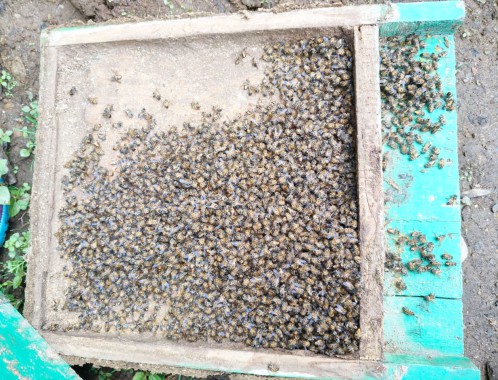
incidence of widespread bee deaths due to unknown causes in parts of West
Sikkim, particularly under Yuksam-Tashiding constituency, has emerged as a serious
concern for apiculturists, ecologists and environmentalists alike.
Several beekeepers from the region have reportedly
lost numerous hives, with the exact cause of the deaths yet to be determined.
Farmers fear the possibility of large-scale extinction if a thorough assessment
is not conducted and timely remedial measures are not implemented.
Beekeepers in Yuksam, Gerethang and other parts of
the constituency, many of whom have been trained in apiculture and engaged in
bee farming for several years, areuncertain about the reasons behind the
continuous loss of bees. While some have speculated that the flowers of Chinese
teak, believed to be toxic to bees, may be contributing to the mortality,
others have dismissed this claim, noting the absence of such trees in the
affected areas.
Ganga Dahal, a beekeeper from Gerethang, has lost
five to six hives since the outbreak of the unknown disease. According to
Dahal, experts suggested that the deaths could be linked to changing climatic
conditions, the presence of toxic flora or inadequate feeding practices.
He further observed that bees reared in
scientifically designed hives, provided under government schemes, have been
particularly affected, resulting in significant losses this season. “Bees in
scientifically prepared hives have suffered greatly, whereas those kept in
traditional, locally made hives remain safe so far,” he said.
D.S. Limboo, zilla adhyakshaof Geyzing district
and an apiculturist, also lost three hives despite following recommended
treatment and feeding practices. He rejected the theory linking bee deaths to
Chinese teak, reiterating that such trees are not found in the Yuksam-Tashiding
region.
Describing the symptoms, Limboo said that affected
bees exhibit dysentery, swollen abdomens, sluggish movementand disorientation
before dying. “The disease appears epidemic in nature. An urgent and detailed
assessment by experts is required,” he stated.
Another beekeeper, Den Hang Limboo from Gerethang,
echoed similar concerns. He informed that the disease is spreading rapidly and
poses a serious threat to the bee population. He emphasized that many families
in the area depend on apiculture as their primary source of income and warned
that continued losses could severely impact livelihoods.
Sushil Chettri, a mellitologist and apiculturist
associated with the State government, confirmed receiving reports of increasing
bee mortality in parts of the constituency. He informed that he would soon
visit the affected areas to assess the situation and assist farmers.
Chettri indicated that sudden weather changes and
climatic variability could be contributing factors, along with other risks such
as queen bee loss, improper feeding, and disease. “A detailed assessment will
be conducted to identify the root cause. Beekeepers will also be sensitized on
best practices for effective hive management,” he said.
Meanwhile, ecologists and environmentalists in the
district have expressed deep concern, highlighting the critical role of bees in
maintaining ecological balance through pollination. They have called for
immediate scientific investigation into the causes of the large-scale bee
deaths in the region.
Reports of similar incidents have also emerged
from Kalimpong, Darjeeling and neighbouring Nepal in recent weeks, with the underlying
cause still unknown. Beekeepers in Yuksam stated that they are in contact with
farmers from other regions in hopes of finding a solution to the crisis.