


Sunday, Mar 22, 2026 12:00 [IST]
Last Update: Sunday, Mar 22, 2026 06:27 [IST]


GANGTOK, (IPR):
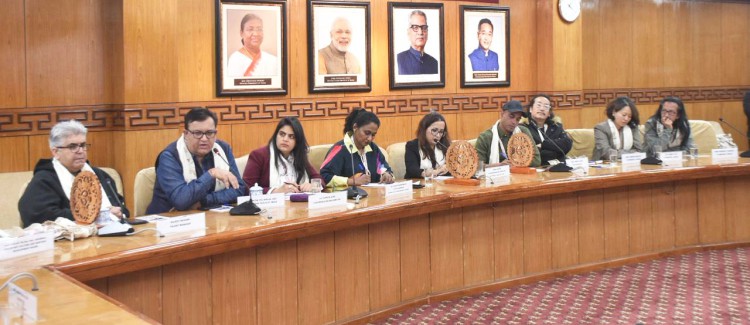
The third day of the Sikkim International Film Festivalfeatured a roundtable
conference on “strengthening media and entertainment sector” in the State. The session
was held at Chintan Bhawan and brought together key stakeholders from the
government, industry experts, and regional filmmakers.
State Information and Public Relations secretary
Annapurna Alley, in her welcome address, emphasised the need to strengthen the
foundational framework of filmmaking in the State. She underscored the
importance of treating filmmaking as an infrastructural project, with robust
policy support serving as a key building block. Highlighting cinema as a
potential economic driver, she called for making Sikkim a more film-friendly
destination by streamlining institutional mechanisms, including film
commissions.
She further stressed the importance of investing
in film production, noting that the Northeast offers a naturally conducive
landscape for filmmaking. Referring to earlier deliberations, she reiterated
the vision of positioning the state as a co-production hub. She also
highlighted the need for capacity building among the local population to better
support film productions. Citing noted filmmaker Imtiaz Ali’s interest,
expressed during his masterclass session, in shooting in the state, she pointed
to the growing appeal of Sikkim as a filming destination. Concluding her
address, she appealed to the dignitaries for enhanced market access and greater
visibility for regional cinema.
Press secretary to the Chief Minister, Yougan
Tamang, highlighted the growing importance of the creative economy in the
state’s development trajectory. He emphasised the prioritisation of the “orange
economy” as a key driver of entrepreneurship, noting its potential to generate
employment and foster innovation within the creative sector. He further stated
that under the visionary leadership of Chief MinisterPrem Singh Tamang, the
government is actively promoting policies and initiatives aimed at nurturing
creative industries and empowering local talent.
IPR chairmanAshit Raiunderscored the role of media
as a crucial pillar in shaping public discourse and promoting the State’s
cultural and creative identity. He emphasised the need for a collaborative
approach between the government and creative stakeholders to strengthen the
media ecosystem, while also highlighting the importance of leveraging emerging
platforms to amplify regional voices and narratives.
Similarly, Sikkim Art, Culture and Heritage
Development Board chairman Sanjay Dilpali Raihighlighted the significance of
preserving and promoting the rich cultural heritage of the State through cinema
and allied creative mediums. He stressed the need to integrate traditional art
and culture with contemporary storytelling practices, thereby creating unique
and authentic narratives that reflect the identity of Sikkim on a global
platform.
Former
renowned Indian film criticRajeev Masand, who now serves as the COOof Dharma
Cornerstone Artists Agency, stated that OTT platforms have
witnessed significant growth in the post-COVID era. Citing acclaimed series
such as “Paatal Lok” and “The Family Man”, which feature narratives from the
Northeast, he highlighted the increasing opportunities for regional
representation. He advocated the idea of “local goes global” by showcasing
regional stories on international platforms. He further noted that streaming
platforms are increasingly exploring non-mainstream subjects, describing the
present moment as a critical opportunity to be leveraged. From a talent agency
perspective, he added that the industry is actively seeking authentic and
region-specific narratives.
Dr.TejChingtham,advisory council member, National
Startup Advisory Council, emphasised the significance of storytelling as a
vital tool of communication in the digital age. He pointed to the
underrepresentation of the Northeastern region in mainstream narratives and
stressed the need for accurate and meaningful portrayal. He further advocated
for policy frameworks that run parallel to and facilitate effective
storytelling.
During the interaction, prominent regional
filmmakers raised constructive concerns regarding subsidies and stressed the
need to prioritise the development of a self-sustaining film ecosystem. They
also called for a comprehensive policy framework to support filmmakers and
highlighted the importance of developing a robust film market in the coming
years. Additionally, they urged the streamlining of approval processes and
proposed the establishment of a single-window system to facilitate filmmaking
activities in the state.
Representatives from various line departments
expressed their cooperation and support in addressing the concerns raised
during the session.
The conference was also attended by Culture,
Drama, Music, Dance and Film Board chairman Tashi Tshering Bhutia and Ronn
Joshua Bautista, Third Secretary and Vice Consul at the Embassy of the
Philippines.