





Saturday, Jun 13, 2026 23:30 [IST]
Last Update: Friday, Jun 12, 2026 17:48 [IST]


New documentary shines a
spotlight on Sikkim’s rich biodiversity, rare wildlife and culture of
coexistence
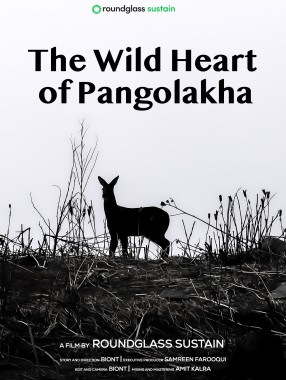
GANGTOK: A new nature documentary titled ‘The Wild Heart of Pangolakha’ is bringing global attention to the untouched beauty and ecological significance of Pangolakha Wildlife Sanctuary in Sikkim.
Produced
by Roundglass Sustain and directed by Biont, the film explores the sanctuary’s
dramatic landscapes, ancient Silk Route connections and its rich biodiversity,
offering a rare glimpse into one of the Himalayas’ most pristine and
lesser-known ecosystems.
Located
in Pakyong district, the sanctuary spans an altitudinal range from around 1,500
metres to nearly 4,900 metres, where within a matter of hours the terrain
shifts from lush, orchid-filled sub-tropical forests to mist-laden temperate
zones and further up to frost-covered alpine scrub.
This
unique ecological gradient supports an extraordinary range of flora and fauna,
making Pangolakha a vital corridor for rare and elusive Himalayan species.
The
documentary captures this “wild heart” through its dense forests, drifting
mountain mist and silent valleys, where nature continues to follow an ancient
rhythm. It highlights the presence of rare wildlife such as the elusive
Himalayan musk deer, red pandas inhabiting the high-altitude canopy,
specialised bird species like the fire-tailed myzornis and blood pheasants, and
even the snow leopard that roams the higher rocky reaches.
Following
the historic Silk Route into these remote mountains, the film presents
Pangolakha as both a natural treasure and a conservation priority, shedding
light on its fragile ecosystem and the need to preserve its unique
biodiversity.
Excerpt from an exclusive
interview with SIKKIM EXPRESS…
What inspired your team to
document Pangolakha Wildlife Sanctuary and its fragile ecosystem?
Dhritiman, Biont: As a country, India has about 5%
protected area coverage, and while Pangolakha is a part of it, a huge amount of
wildlife and biodiversity also thrives outside Pangolakha’s protected area. The
story of Pangolakha is as much a story of the silk route that runs through the
landscape as it is about the wildlife sanctuary. Along this road there are
species like the rare Musk deer that are easily sighted, while in other
locations they are secretive and extremely difficult to see. This is because
there is an acceptance and coexistence of nature in the area, and cultural
protection systems in place that make this unique, this is why we decided that
this story is crucial and must be documented so that people outside of the
region are also aware of this.
However,
this is not the only reason. The fact that there is a road through this
biodiverse area means that there is a lot more human activity as well, and our
focus was to bring awareness to the fact that there is so much wildlife and
biodiversity here so that whatever interactions people have with nature need to
be responsible. We ask ourselves – why do we want to tell a story? It is not
just for entertainment, but to fulfil a purpose that every natural-history
story should have – to connect people with nature, bring awareness to issues in
the landscape, and to hopefully inspire more responsible action in the future.
Samreen, Roundglass Sustain: For Sustain films, it is
important to talk about what doesn’t make it to the mainstream media - what is
unseen, hidden, unacknowledged. That’s why stories about lesser known habitats
like Pangolakha are important to us.
For someone who hasn’t watched
‘The Wild Heart of Pangalokha/Sikkim Wildlife’, how would you explain the
message behind the documentary?
Dhritiman, Biont: Like I mentioned, the story of
Pangolakha goes much further than just the wildlife sanctuary, it is also an
exploration of the silk route and the continuous wild habitat that follows the
road. Pangolakha can be considered a representation, or an example of many
places in the Himalayas that are extremely similar – a road flowing through a
rich, wild landscape, where species like Red pandas, Musk deer, many kinds of
birds, leopards and Black bears in the lower areas, are all present and thriving.
And such patches of biodiversity are abundant in the Himalayas, often in and
around where people live and work. This is the beauty of India. If we become
aware of such habitats in one corner of Sikkim, we will hopefully be able to
identify similar ones in other parts of the Himalayas in India and be able to
connect with them and be responsible when we travel through them.
Brief on the filming process-
pre/production/post. How long did the filming process take
Samreen, Roundglass Sustain: We make films with filmmakers
all over the country to bring forth nuanced, lesser-known stories. We
extensively mentor the making of the films from inception till release. The
making of the films take anything from one year to two years.
Dhritiman, Biont: Our process behind each film is
quite unique, in the case of Pangolakha you could say that the pre-production
started 20 years ago when I first started to visit the landscape.
While
the production of the film took a few months, the stories emerged over the last
two decades of exploring, understanding the biodiversity, and interacting and
learning from the community in the area, because all the knowledge that was
gained over that time shaped those stories. In a way, it was 20 years of recce
for the film.
What were the biggest challenges
of shooting in Pangalokha?
Dhritiman, Biont: Pangolakha’s elevation is around
2,500 meters, and it is a difficult, steep landscape to explore, not like a
wildlife sanctuary in the plains where the terrain is accessible. Filming a
story in this landscape need a lot of time spent in the field, knowledge and
research of the many different species and different terrains. Since this sort
of project is an evolving process, you need to have an understanding of
mountain wildlife, the right habitats, and seasons, all the knowledge of a
naturalist - which is difficult unless you are able to spend a lot of time
there. That is where the local community really helped by sharing their
knowledge with us and teaching us many aspects of the landscape, without them
we would not have been able to do anything.
Besides
this, there are of course the difficulties that come with the terrain, less
oxygen in the air, very low temperatures and tough ground to cover. We must be
physically very fit in order to work in that landscape.
As mentioned in the text message
earlier, ‘At the heart of the film is the mysterious Himalayan musk deer…’ Why
did you choose the Himalayan musk deer?
Samreen, Roundglass Sustain: We were very excited by the
sighting of the musk deer, such a rare species. We have tried to film the musk
deer earlier in the high altitude habitats of Uttarakhand and it was extremely
difficlut to shoot the creature then. We finally managed to film it in
Pangolakha. It is always exciting to bring to the world the behavior and
challenges a species like the musk deer faces today.
Dhritiman, Biont: The Musk deer is a rare, very
elusive mammal, it is also not a true deer and is very unique in its behaviour
and characteristics. Locally, this deer is known as Kasturi, and in many parts
of its range it is hunted for its musk glands. It is unlike any other mammal in
Sikkim or the Himalayas, and we want to tell stories of species that are less
known, often overlooked.
In
Pangolakha, the Musk deer is often seen, sometimes right next to the road!
Which shows how comfortable the wildlife is around human activity, because of
the coexistence between people and nature. These are the stories we want to
tell, stories that connect people with nature and landscapes.
Capturing elusive species like
the Red Panda and Snow Leopard requires patience, and your cinematographer is
done an incredible job. Can you share this experience or the BTS process?
Dhritiman, Biont: When I first started
photographing mountain wildlife, such as red pandas in Singalila, many years
ago, it was not easy. There was hardly anything known about their movements,
what kind of habitat they preferred, it took me a long time to make good
photograph after many failures. It was after learning from each failure,
gaining knowledge from the locals and spending a lot of time tracking behaviour
that I managed to capture decent photographs. This has been my process while
approaching each project so far, gathering information, repeatedly visiting the
locations, and slowly understanding patterns of behaviour. All of this
knowledge and learning, gained over many years, is what I use as the basis of
the photography and filming work that we do now while making our films.
How important is the Eastern
Himalayan region in terms of biodiversity and conversation
Dhritiman, Biont: The Eastern Himalayas holds are
some of the most biodiverse places on earth, with more than 1000 species of
birds, 300 species of mammals and thousands of plants, amphibians, reptiles and
insects. And every year more species are discovered. It is also a storehouse of
water, so many of our country’s rivers are fed by the mountains. It is critical
that we conserve this whole region, for the flora, fauna and also the
communities that live and depend on the mountains and the ecology there.
What roles do the local
communities and Sikkim’s Forest department play in protecting wildlife in the
sanctuary?
Dhritiman, Biont: The Forest Department in Sikkim
does tremendous work in Pangolakha, in particular a lot of groundwork with
feral dog populations and also managing forest fires in the region. The amount
of wildlife and biodiversity, particularly close to the road and around people
reflects how much work has gone into conserving the biodiversity there.
The
community is also a very important factor in why there is so much wildlife in
Pangolakha, due to the acceptance and coexistence and cultural protection that
is shown towards nature.
How do documentaries like this
help to bridge the gap between scientific conservation and public awareness?
Samreen, Roundglass Sustain: Films and stories are the way we
make sense of our world and get to know aspects of our country, its environment
and society that otherwise are lost to us. With our films we build connections
between people and their natural world and bring to them conservation practices
deeply rooted in science and indigenous knowledge.
Dhritiman, Biont: Documentaries, and all visual
communication has the advantage of needing no language, and in that way it also
breaks barriers of language. It is the strongest way to bridge gaps between
people and communities and is the easiest way to inspire people. Unfortunately,
there is a huge disconnection between people and the natural world at present,
and our goal is to try and dissolve that disconnect as much as we can through
these films.
Pangolakha,
like all our films that are specially make with Roundglass Sustain are
completely free to watch, available online, which is part of our attempt to
make the
What message do you hope audience
will take from the documentary?
The
message of coexistence and acceptance. Awareness of the rich biodiversity in
India, the unique and often overlooked species, and also the communities that
work to protect them and live alongside them. The culture of protection that we
hope will be adopted.
Reviews so far. Release date and
streaming platforms
Pangolakha
is available online on Roundglass Sustain’s Youtubechannel and website, we want
our films to be freely available for viewing. We are also working to hold
screenings of the film in the communities around where we have filmed, through
people we know and work with in the community.
Are you planning to take the
documentary to various film festivals?
Yes,
we plan on submitting the film to different wildlife and environment focused
film festivals, both national and international.
Are there any other unexplored
Himalayan ecosystem in Sikkim that you would document in future?
Of
course, Sikkim’s Himalayas are incredibly diverse in landscapes, flora, fauna
and culture and there is still a lot we hope to explore and document in the
near future.
* Samreen
Farooqui is the Creative Head, Videos, at RoundGlass Sustain
* Wildlife
photographer Dhritiman Mukherjee is from Biont Films