


Tuesday, Mar 03, 2026 22:00 [IST]
Last Update: Monday, Mar 02, 2026 16:30 [IST]


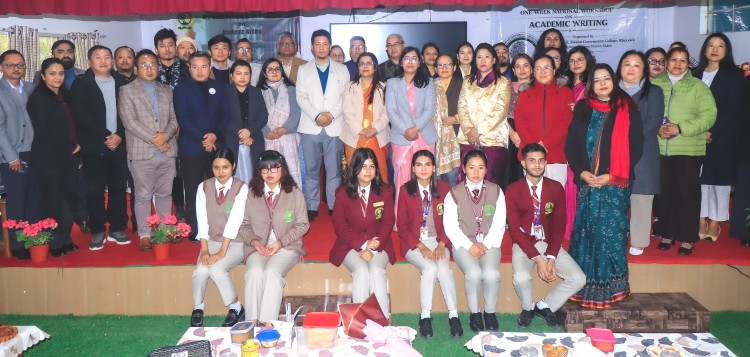
PAKYONG, (IPR): Member of Parliament, Lok Sabha, Indra Hang Subba attended the
inaugural session of one-week National Workshop on Academic Writing, organised
by Research Cell, Sikkim Government College, Rhenock, and supported by
Rashtriya Ucchatar Shiksha Abhiyan (RUSA) at the seminar hall, SGC Rhenock on
Monday.
The
workshop, aims to strengthen academic writing skills and foster critical
inquiry and facilitate scholarly engagement among students, researchers, and
resource persons from diverse academic disciplines.
During
the event, the Lok Sabha MP lauded Sikkim Government College, Rhenock for
organising the workshop and described it as a proactive initiative aimed at
strengthening academic culture in the state.
Addressing
the students, he encouraged them to pursue their dreams and to participate
actively in the workshop. He stated that confusion is a natural part of life,
and the decisions taken during such phases reflect what one has learned. He
advised students to be careful while choosing a career, to explore and
experiment, and to seek personal happiness so that they may contribute
positively to others. He further remarked that the academic field offers
intellectual freedom and urged students to develop the habit of reading and
continuous learning.
He
informed that he has been nominated as a Member of the Joint Committee on the
Viksit Bharat Shiksha Adhishthan Bill, 2025, constituted by the Speaker of the
Lok Sabha, and noted that the proposed legislation seeks to grant autonomy to
institutions.
He
remarked that institutions often reflect the policies of the government and
highlighted the role of public intellectuals in bringing balance to public
discussions. Explaining social justice in simple terms, he said it means
empowering those who are at the lowest levels of society. He stressed that the
rule of law is essential to ensure justice, as without it only the strongest
tend to dominate, and called for collective efforts to uphold it.
He
also urged faculty members to adopt a more empathetic and understanding
approach in their teaching.
Principal,
SGC Rhenock, Dr Shobha Sharma Basistha expressed gratitude to the chief guest
for his presence. She highlighted the institution’s continued efforts to
provide platforms for learning and societal engagement through seminars and
workshops. She informed that the workshop would be particularly beneficial for
students working on dissertations and research papers. She noted that academic
writing involves asking meaningful questions, seeking evidence-based answers
and presenting arguments with integrity. She added that academic writing
nurtures critical thinking, curiosity and ethical scholarship. She further
encouraged students to explore diverse and unconventional career paths beyond
traditional academic and civil service options.
In
his keynote address, Professor, Department of Geography, Sikkim University, Dr
Sohel Firdos emphasised the linkage between teaching and research. He advocated
for research based teaching and integration of research into the curriculum.
He
also highlighted the growing importance of evidence-based policy and stressed
the need for collaboration among policymakers, society and scientists to
formulate effective public policies. He elaborated on the evolution from
traditional teaching methods to research-led and research-oriented approaches,
each having distinct implications for student engagement. He further underlined
the societal relevance of research, stating that research need not be confined
to grand theories but may also emerge from practical experiences leading to
meaningful publications. He noted that evidence-based policymaking, enhances
public trust and confidence.
Workshop
Convenor, Research Cell SGC Rhenock, Dr Chunnu Giri expressed appretiation to
the chief guest for his commitment to educational development, youth empowerment,
and research in the State.
She
briefed the gathering on the objectives of the workshop, which include
equipping participants with essential academic writing skills such as
structuring research papers, citation practices, plagiarism awareness and
publication ethics. She urged participants to actively engage in the sessions
and maximise the benefits of the workshop, expressing hope that it would
strengthen writing skills and open avenues for academic excellence.
A
series of technical sessions followed under the theme ‘Introduction to Academic
Writing and Literature Review’.
The
session on Introduction to Academic Writing and its Importance was delivered by
Professor (Retd.), Department of Sociology, University of North Bengal, Sanjay
Kumar Roy.
Likewise,
Assistant Professor, Department of Anthropology, University of Delhi, Dr
Abigail Lalnuneng conducted a session focusing on style, tone, clarity and
critical approaches to reviewing literature.
Over
the course of the programme, participants will engage in structured lectures,
methodological discussions and guided writing sessions aimed at enhancing
research competencies and academic rigour.
The
programme concluded with the felicitation of the chief guest and speakers with
mementoes, and the distribution of certificates to the resource persons.
The
session was attended by the Vice Principal, Dean, Administrative Officer,
faculty members, SRC members and students of Sikkim Government College,
Rhenock.