


Thursday, Aug 06, 2026 10:00 [IST]
Last Update: Thursday, Aug 06, 2026 04:28 [IST]


GEYZING,:
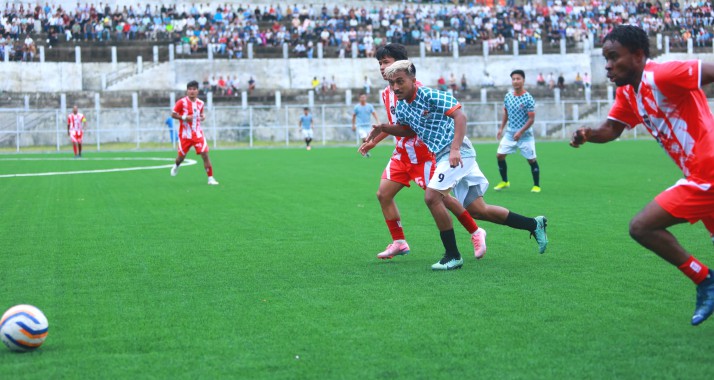
Growing concern over the increasing recruitment of non-local and foreign
footballers for Independence Day tournaments in Sikkim has prompted residents
of West Sikkim to demand a clear regulatory policy to safeguard opportunities
for local players.
While
acknowledging the role of experienced outside players in improving the quality
of competition, many citizens have urged the Sports and Youth Affairs
department to frame guidelines that strike a balance between competitiveness
and the development of homegrown football talent. They argue that the absence
of such a policy not only side-lines Sikkimese players but also leads to a
substantial outflow of money from the State during the annual sporting
celebrations.
“The increasing
practice of local football clubs recruiting players from other states of India,
Nepal and some African countries deprives local players of adequate
opportunities, particularly during the annual Independence Day football
tournaments and other celebratory sporting events held across the State,”
locals said.
They
have urged State Sports and Youth Affairs department to formulate a
comprehensive regulatory framework to govern the recruitment of foreign
players. “Clear rules should be introduced to limit the number of non-local and
foreign players a club can field, with many recommending a maximum of four to
five foreign players in a team.”
Many
of them maintained that football in the State should not be viewed merely as a
source of entertainment but as a platform for nurturing and developing local
football talent. They stressed that every football tournament should create
meaningful opportunities and brighter future prospects for the youth of Sikkim.
According to them, encouraging greater participation of local players would not
only strengthen the State's football ecosystem but also inspire aspiring
footballers to pursue the sport at higher levels.
While
they are not opposed to the hiring of non-locals including overseas players,
they contended that there must be a balance between the number of foreign and
local players to ensure that the local footballers also get chance. They
further argued, “The participation of clubs from neighbouring countries in
tournaments held in Sikkim is a positive development. However, when local clubs
field an entire line-up of foreign players, it undermines the aspirations of
local footballers and deprives them of opportunities to develop and progress in
the sport.”
On
the condition of anonymity, a former national footballer said that it was not
easy to formulate a comprehensive policy governing the hiring of non-local or
foreign players. He pointed out that certain government departments, which do
not have their own pool of players, often have to rely either on non-local and
foreign players to form teams and ensure their participation in tournaments.
However, he appreciated the concerns raised by the public regarding the
interests of local footballers and expressed hope that positive changes would
be introduced in the future through a balanced policy on the hiring of players
from other countries.
Pravin
Sharma, a politician and activist, strongly protested the practice of hiring
non-local and foreign players and the substantial expenditure on football
tournaments held during the Independence Day celebrations in Sikkim.
Sharma
alleged that each constituency spends nearly Rs. 40-50 lakh on football-related
events every year. He argued that a significant portion of this amount could
instead be invested in developing sports infrastructure, training facilities
and long-term programmes for local youths.
Sharma
claimed that insufficient investment has been made in the State’s sports
sector. “Sikkim still lacks adequate sports academies to nurture the raw talent
and potential of its youth. Privately-run sports academies in the State are
also struggling to survive due to a lack of government support and financial
constraints.”
He
further alleged that a substantial amount of money spent on these events
eventually flows outside the State rather than benefiting local clubs and
players. "Most of the money is reaped by non-locals and outsiders. No long-term
objectives for local footballers are prepared after the conclusion of
celebration,” Sharma said.
Several
concerned citizens have taken to social media to voice their disappointment,
arguing that the trend is limiting opportunities for local footballers. One
senior citizen wrote, “Is there any provision or local law allowing the hiring
of football players from outside? If not, such a policy should be introduced.
Let our Sikkimese players flourish first.”
Some
individuals stated that although the inclusion of non-local players may attract
larger crowds, it should not come at the cost of local footballers'
aspirations.
A
local footballer, who wished to remain anonymous, said he was unable to secure
a place in any team this year due to a lack of interest from football clubs.
"No club hired me this year as nobody showed any interest in signing
me," he said while watching the tournament as a spectator.
Many individuals
feel that, in order to safeguard the interests and aspirations of local
footballers, the concerned department, in coordination with local football
clubs, should formulate a clear and effective policy that ensures adequate
opportunities for local players while also promoting their long-term growth and
development.