


Wednesday, Oct 07, 2026 23:00 [IST]
Last Update: Tuesday, Oct 06, 2026 17:28 [IST]


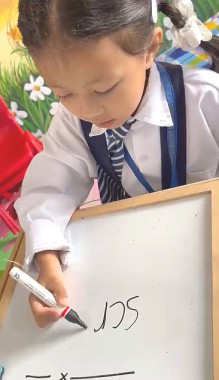
GANGTOK,: With the aim of making reading fun, Kuzu Phonics, a homegrown
initiative of the State Education Department, has been helping young children
in government schools across the State take their first confident steps towards
reading.
From
identifying sounds and matching them with letters to blending sounds to read
words such as ‘cat’, ‘bat’ and ‘mat’, Kuzu Phonics makes the early stages of
English reading simple, joyful and engaging. Through games, rhymes, stories,
activities and hands-on learning, children learn not just what a letter looks
like, but what sound it makes and how sounds come together to make words.
The DIETs of
Gangtok, Namchi and Gyalshing districts developed the homegrown initiative with
technical support from Azim Premji University, Bengaluru, informed the
Education Department. The initiative is currently being piloted in 30
government schools across Gyalshing, Dentam, Bermiok Martam, Nandok, Namchi,
Namthang, Poklok Nandugaon and Yangang blocks across three districts, involving
around 60 teachers and approximately 180 Grade 1 students.
According to
the Education Department, teachers are already bringing Kuzu Phonics to life
through colourful learning spaces, sound games, phonics activities and creative
classroom materials. Regular school visits and meetings with school heads,
teachers and parents help the team collect feedback and improve the programme.
They are also
looking at changes in children before and after the introduction of Kuzu
Phonics, such as their interest in English, confidence in speaking, ability to
recognise sounds and letters, ability to blend sounds to make words and
participation in classroom activities. Parents are also sharing the changes
they notice in their children at home. This feedback is helping the team
understand what is working well and what needs improvement.
“The first
eight years of a child’s life are among the most critical years for human
development. Neuroscience has shown that the young brain is extraordinarily
receptive to its environment, with millions of neural connections being formed
every second in the early years. This is why Early Child Care Education (ECCE)
is not preparation for education, but the very foundation on which all future
learning, wellbeing and potential are built. Hence, if we want to transform
education, we must begin in pre-primary, before the child enters primary
school,” informed the Education department.
“Kuzu Phonics
recognises this science of early childhood development: that we are not merely
preparing young children for school; we are shaping the foundations of the
adults they will become. It also responds to the aspirations of parents who
want their children to learn and speak English confidently from an early age.
Many parents feel that good English is important for their children’s education
and future. This is also why some parents prefer to send their children to
private English-medium schools. By giving children in government schools more
opportunities to listen, speak, play with sounds and learn to read English,
Kuzu Phonics aims to strengthen English learning and build greater trust and
confidence among parents in government schools,” the Department added.
Kalpana
Pradhan, parent of a Class 1 student, said, “It feels good to see that my
daughter has improved a lot in English. Now students don’t have to mug up the
lessons at home. The government schools are teaching them using phonics. On
behalf of all the guardians, I would like to thank the school and teachers.”
Another parent
said, “These days, my child has improved a lot in English, especially in
pronunciation and reading. Since Kuzu Phonics was introduced in her school, she
reads correctly, writes perfectly and her pronunciation is also correct. She
can write by hearing any sound. Earlier, during our time, we didn’t have
phonics. I believe phonics studies are a must for students these days.”
According to
feedback from a mother, her child could not utter or understand a word in
English. However, after she joined Burtuk High School and phonics was
introduced in her classes, there has been a lot of improvement in her.
“She can now
read and understand English, and whenever she speaks, her words are very clear.
She is confident now. Grateful to the principal of Burtuk High School and
phonics teachers. She is now a happy child who can understand and speak in
English,” said her mother.
The parents
also thanked the State Government and the Education Department for the
initiative.
“Earlier,
government school students had poor English, but now, since Kuzu Phonics was
introduced, we can see the improvement in all Class 1 students. Now students
love to go to school too,” said the parents.
The three
DIETs will use the learning and feedback emerging from the pilot in 30 schools
to guide their expansion, with the mission of taking Kuzu Phonics to all
government schools within the next three years.
“Kuzu Phonics
is more than a phonics programme. It is an effort to ensure that every child in
government schools gets a joyful and confident beginning in reading and a
strong foundation for the future,” informed the Education Department.