


Sunday, May 03, 2026 23:15 [IST]
Last Update: Saturday, May 02, 2026 17:40 [IST]


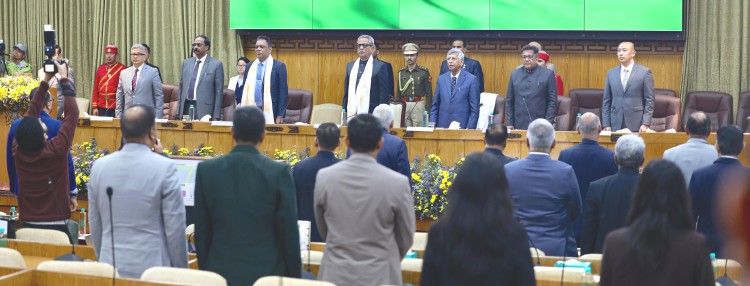
GANGTOK, (IPR): The National Conclave on Technology and Judicial Education concluded today with the final closing plenary session held at Chintan Bhawan.
Organised by the High Court of Sikkim in collaboration with the eCommittee, Supreme Court of India, the two-day conclave, comprising of two conferences being simultaneously held at Chintan Bhawan and Samman Bhawan, brought together members of the judiciary, legal experts, and delegates from across the country and abroad to deliberate on the role of technology in strengthening judicial systems and legal education.
Sikkim Governor Om Prakash Mathur attended the closing plenary session as the chief guest.
In his address, the Governor underscored the urgent need to integrate technology with legal education and judicial processes, while ensuring inclusivity and accessibility, during the concluding session of a two-day conference on Judicial and Technological Education.
The Governor described the conference as a “significant step towards strengthening one of the foundational pillars of democracy—the judiciary.”
Highlighting the State’s progressive approach, the Governor stated that the deliberations throughout the conclave reflected the growing importance of aligning judicial systems with rapid technological advancements.
He emphasised that the adoption of digital tools is not merely an administrative upgrade but a structural transformation aimed at making the justice delivery system more transparent, efficient, and accessible.
Referring to innovations such as e-processes, paperless courts, digital records, e-filing, hybrid court models, and live streaming of proceedings, the Governor said these initiatives are redefining judicial administration across the country. He further stated that Sikkim has begun the transition towards becoming India’s first fully paperless judiciary, in line with the broader vision of Digital India.
The Governor also stressed the expanding role of Artificial Intelligence and digital management systems, describing them as essential to equipping judicial institutions to address complex legal challenges, particularly in the evolving cyber landscape.
At the same time, he called for a balanced approach to ensure that technological advancement does not compromise accessibility.
Among key recommendations, the Governor advocated for greater use of local languages in judicial proceedings, supported by translators and modern applications, to make the system more citizen-friendly.
He also cautioned against the misuse of publicly accessible court proceedings on social media platforms, urging the need for safeguards and stricter legal provisions to counter misinformation and propaganda related to judicial decisions.
Highlighting procedural efficiency, the Governor stressed that urgent judicial orders, including bail directives, must be transmitted promptly to subordinate courts to ensure swift implementation. He further recommended that young advocates be provided free access to judicial decisions to support their professional development.
Expressing confidence in the outcomes of the conference, the Governor said the deliberations would contribute meaningfully to building a robust and future-ready judicial system aligned with the vision of a developed India.
In his special address, Justice A.H.M.D. Nawaz, Judge, Supreme Court of Sri Lanka, highlighted the deep cultural and historical ties between India and Sri Lanka, noting that his long association with India over the years had fostered a strong sense of connection with the country.
He added that these ties extended beyond geography to shared cultural influences, traditions, and historical narratives, which continue to strengthen the relationship between the two nations.
Referring to the conclave, he appreciated the initiative of bringing together members of the judiciary from across the Commonwealth, describing it as a valuable platform for exchange of ideas and collaborative learning. He stated that such engagements were important for sharing knowledge, understanding emerging challenges, and collectively working towards strengthening judicial systems.
He further remarked that the discussions held over the two days had provided meaningful insights into the evolving role of technology in the justice delivery system.
Emphasising that the legal and judicial professions were at a crucial juncture, he stated that the adoption of new tools and technologies must be approached thoughtfully, particularly in the context of evidence and decision-making processes.
He further observed that Sikkim, with its unique geographical and cultural position, served as an ideal setting for such deliberations, bringing together diverse perspectives and ideas. He expressed hope that the outcomes of the conclave would continue to guide future efforts in judicial reform and innovation.
He appreciated the efforts of the organisers and expressed confidence that the exchange of ideas during the conclave would contribute to building stronger, more responsive, and forward-looking judicial systems.
Presenting his observations, Professor (Dr.) S. Sivakumar, President, Commonwealth Legal Education Association, described the conclave as intellectually enriching and forward-looking, and appreciated the initiative of the High Court of Sikkim in bringing together members of the judiciary and legal academia on a common platform.
He highlighted that the discussions over the two days reflected a significant transition in the justice delivery system from one constrained by physical processes to one enabled by digital technologies. He remarked that the deliberations had gone beyond mere digitisation and focused on broader institutional transformation, where technology is used to improve access, efficiency, and transparency in a meaningful way.
Referring to key themes of the conclave, he stated that discussions on e-filing emphasised not just technical implementation but also usability, inclusiveness, and trust. He added that the focus was on re-engineering judicial processes to simplify procedures and enhance institutional clarity.
Speaking on emerging technologies, he observed that tools such as blockchain could strengthen the security and integrity of judicial records, while artificial intelligence offered opportunities to support research, organisation, and case management.
However, he stressed that there must be a balanced approach, where technology assists judicial functions without replacing human judgement, which remains central to the delivery of justice.
He also underscored the importance of judicial education in adapting to these changes, noting that learning systems must evolve to integrate legal knowledge with technological understanding. He stressed that collaboration across jurisdictions, particularly within the Commonwealth, would play a key role in strengthening capacity and sharing best practices.
Highlighting concerns around the digital divide, he cautioned that unequal access to technology could lead to unequal access to justice, and stressed the need for inclusive systems.
Concluding, he stated that the true measure of technological advancement in the judiciary lay not only in efficiency, but in ensuring fairness, protecting rights, and strengthening the justice delivery system, and called for a continued commitment to innovation, collaboration, and ethical governance.
Sharing his reflections, Justice Bhaskar Raj Pradhan, Judge, High Court of Sikkim, described the conclave as a significant and thought-provoking journey, adding that the discussions over the two days had brought forward diverse yet meaningful perspectives.
He observed that while the sessions reflected a range of views, some cautious and others path-breaking, the overall outcome was clear, highlighting the urgent need for continued reforms to ensure that justice is delivered effectively and without delay.
He remarked that the exchange of ideas among judges, experts, and participants from across the country and abroad marked an important moment in the ongoing evolution of the Indian judiciary and the wider Commonwealth judicial community. He noted that the deliberations had provided greater clarity on the use of technology and artificial intelligence in strengthening judicial processes.
Emphasising the changing nature of the justice delivery system, he stated that technology was no longer merely an administrative tool but an integral part of judicial infrastructure. He added that the discussions reflected a growing recognition within the judiciary that delays often stem from systemic inefficiencies, which must be addressed through timely and thoughtful reforms.
He further observed that the judiciary was entering a new phase of transformation, focused on redesigning institutions to make them more responsive and efficient. He emphasised that such progress must be guided by constitutional values and human sensitivity to ensure that justice remains fair and accessible.
He expressed hope that the conclave would be remembered as a significant step towards shaping a more dynamic, technology-enabled, and people-centric judicial system.
In his brief address, Justice A. Muhamed Mustaque, Chief Justice of the High Court of Sikkim, expressed his heartfelt gratitude to all dignitaries, participants, and stakeholders for their valuable contributions to the conclave.
Highlighting the collaborative nature of the conclave, he stated that the successful organisation of such an event in a small State like Sikkim was made possible through the collective efforts of the judiciary, the Bar, technical teams, and the State Government. He also acknowledged the support extended by all stakeholders in ensuring the smooth conduct of the sessions.
The conclave concluded with a note of gratitude delivered by Sonam Denka Wangdi, Central Project Coordinator, High Court of Sikkim.
Earlier, the welcome address was delivered by Tashi Rapten Barfungpa, President, Bar Association of Sikkim (High Court and Subordinate Courts).