


Wednesday, Jul 02, 2025 09:00 [IST]
Last Update: Wednesday, Jul 02, 2025 03:29 [IST]


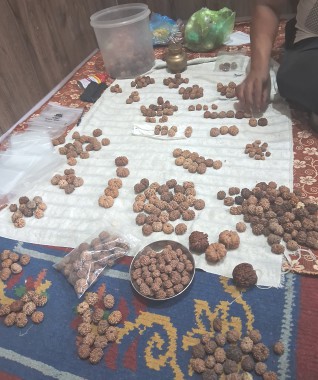
KHANDBARI, : After Indian traders, Chinese merchants have now begun
traveling to Nepal in increasing numbers to purchase Rudraksha, sacred beads
revered for their spiritual and healing properties. These beads, harvested from
trees in the Khandbari region of Sankhuwasabha district, are fetching prices
ranging from Rs 100 to as high as Rs 4 million (Nepali currency) per piece
depending on rarity.
The
growing international interest in Rudraksha has prompted Nepal’s tourism
stakeholders and the national Tourism department to explore ways to integrate
the trade into broader tourism promotion efforts.
“Tourists
often buy Rudraksha malas as spiritual souvenirs, but what’s happening in
Khandbari is on a different scale,” said Bhupendra Karki, a local Rudraksha
trader. “These beads are now a major commercial and tourism attraction.”
Rudraksha
beads with a single facet (or mukhi) are especially rare and are considered to
have miraculous healing powers. In Khandbari, armed security guards are
deployed 24/7 around trees bearing these rare seeds to prevent theft and ensure
safety during harvesting season.
Karki
recalled selling a 28-faced Rudraksha to Indian businessman Pawan Ahuja of
Banaras for Rs 65 lakh two years ago, believed to be the rarest such bead found
in Nepal in the past 90 years.
Now,
Chinese buyers have joined the market. “They are particularly drawn to the
aesthetic and therapeutic qualities of Rudraksha,” Karki said, adding that the
beads are used in bracelets and other meditation accessories. According to him,
there are about 15,000 Rudraksha trees in Khandbari alone, and Chinese
merchants begin arriving just after the monsoon season to purchase the seeds.
Shiva
Khatri, another trader, noted the dramatic price increase. “Beads that once
sold for Rs 5 can now fetch up to Rs 2,000 each,” he said. “This season, more
than 50 Chinese businessmen visited the district in search of five-faced
Rudraksha.”
The peak
trading season runs from March through August, and the price of each bead is
determined by its size, weight, and number of natural lines or facets. Weekly
trade in the Khandbari area is estimated to be worth several million rupees,
with annual turnover exceeding Rs 1 billion, according to local traders.
Basudev
Baral, a tourism entrepreneur from Dharan and coordinator of this year’s Visit
Koshi Promotion Program, believes this growth of international interest will
greatly benefit Nepal’s tourism industry.
“With the
sale of Rudraksha, foreign merchants are not only drawn to the spiritual
aspect, but also to our culture, traditions, and natural beauty, Beyond its
religious value, Rudraksha trade is now a significant contributor to tourism
promotion in Nepal,” Baral said.